
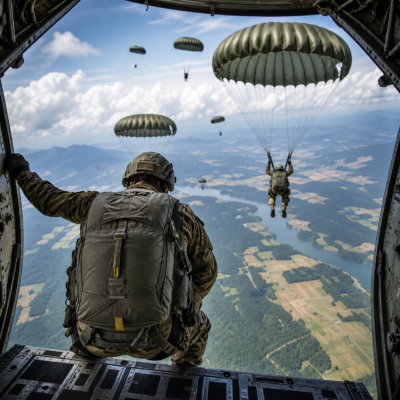
 In modern warfare, speed, precision, and adaptability define mission success. One of the most critical components of rapid airborne deployment is the use of low altitude tactical parachute systems. Designed for fast insertion, minimal exposure, and high operational efficiency, these systems are essential for military units operating in high-risk environments.
At Aerodyne, we engineer parachute systems that support low-altitude deployment scenarios, ensuring reliability, safety, and mission readiness across a wide range of tactical operations.
What Are Low Altitude Tactical Parachute Systems?
Low altitude tactical parachute systems are designed for deployment at altitudes typically ranging from 800 to 1,500 feet Above Ground Level (AGL). These systems prioritize:
- Rapid canopy deployment
- Reduced exposure time in the air
- High reliability under tight timelines
- Compatibility with full combat loadouts
Unlike high-altitude systems, low altitude parachutes must deploy instantly and perform flawlessly under compressed conditions.
Why Low Altitude Deployment Matters
Low altitude insertion is widely used in military operations where:
- Speed is critical
- Enemy detection must be minimized
- Landing zones are restricted or hostile
- Mass troop deployment is required
This method is commonly used for:
- Tactical troop insertions
- Special operations missions
- Rapid response deployments
- Training exercises
Aerodyne systems are engineered to meet these operational demands with precision and consistency.
Key Features of Aerodyne Low Altitude Systems
1. Rapid Deployment Mechanisms
Aerodyne’s static line systems are optimized for immediate canopy inflation upon exit. This ensures:
- Minimal delay between exit and deployment
- Safe descent within limited altitude
- Reduced risk of malfunction
2. Durable Canopy Construction
Our parachutes are manufactured using MIL-C-7020 Type I ripstop nylon, providing:
- High tear resistance
- Consistent airflow performance
- Durability under repeated use
This material is ideal for the stress conditions associated with low altitude deployments.
Related:
https://aerodyne-mps.com/2023/09/12/different-types-of-nylon-ripstop-fabric-singapore/
3. Load-Bearing Capability
Low altitude systems must support both personnel and equipment. Aerodyne parachutes are designed to:
- Handle full combat gear loads
- Maintain stability during descent
- Distribute weight evenly across suspension lines
4. Steerable and Non-Steerable Options
Depending on mission requirements, Aerodyne offers:
- Non-steerable systems for mass troop deployment
- Steerable systems (MC1 variants) for increased landing precision
This flexibility allow
s military units to adapt based on terrain and operational objectives.
Operational Advantages of Low Altitude Tactical Systems
Reduced Exposure Time
Shorter descent time minimizes vulnerability to enemy detection or engagement.
Precision Landing Capability
Steerable systems allow for controlled landings in confined or hazardous zones.
Mass Deployment Efficiency
Static line systems enable rapid deployment of multiple personnel in seconds.
High Reliability
Simplified deployment systems reduce the risk of failure under pressure.
Typical Deployment Scenarios
Aerodyne low altitude tactical parachute systems are used in:
- Airborne infantry operations
- Special forces insertions
- Urban and confined landing zones
- Night-time operations
- Rapid-response missions
These environments require equipment that performs consistently under stress.
Safety and Compliance Considerations
All low altitude parachute systems must meet strict safety and compliance standards, including:
- MIL-STD parachute requirements
- NATO STANAG compatibility
- Load and deployment testing protocols
- Regular inspection and maintenance procedures
Related:
https://aerodyne-mps.com/contact/
https://aerodyne-mps.com/2024/11/07/military-parachute-systems-precision-and-reliability-with-aerodyne/
Aerodyne ensures all systems are built and tested to meet these expectations.
Best Practices for Low Altitude Operations
To ensure mission success:
Conduct thorough pre-jump inspections
Use appropriate parachute configuration for the mission
Train personnel for rapid deployment scenarios
Monitor environmental conditions (wind, terrain)
Follow standardized deployment procedures
These practices reduce risk and improve operational efficiency.
Why Choose Aerodyne for Low Altitude Tactical Systems
Aerodyne is trusted globally for delivering parachute systems that meet modern military demands.
We provide:
- Proven static line and tactical parachute systems
- High-performance materials and construction
- Compatibility with military gear and accessories
- Reliable deployment performance under pressure
Our systems are designed for real-world conditions—ensuring confidence at every altitude.
Conclusion: Precision at Low Altitude
Low altitude tactical parachute systems are a critical component of modern airborne operations. They enable rapid, efficient, and reliable insertion into complex environments where timing and performance are essential.
Aerodyne continues to support military forces worldwide with parachute systems engineered for durability, compliance, and operational success.
Contact us today to find out more
https://aerodyne-mps.com/contact/
